
WELCOME BONUS 300%
UP TO €2000 + 100
FREE SPINS
UP TO €2000 + 100
FREE SPINS
Home → Blackjack
Blackjack at Fairspin Casino: Variants, Rules and Payouts
Perfect Pairs vs 21+3 in House Edge
Evolution offers Infinite Blackjack with four specific side bets including Any Pair, 21+3, Hot 3, and Bust It at the live dealer table. The game utilizes a six-deck shoe to determine outcomes for these supplementary wagers placed alongside the main blackjack hand. Players can stake up to 5,000 EUR on these options while seeking payouts distinct from the primary 3:2 blackjack win. The house edge varies significantly across these four distinct betting categories depending on the specific card combinations achieved.
The standard Infinite Blackjack variant maintains an overall RTP of 99.47% when players adhere to optimal basic strategy for the main game. This high return percentage contrasts sharply with the lower returns typically found in traditional casino floor games or older digital versions. The presence of multiple side bets dilutes the aggregate return slightly but provides diverse opportunities for higher variance payouts during sessions. Understanding these percentages helps players manage their bankroll expectations over extended periods of play at the virtual table.
Side bets like 21+3 combine the player's first two cards with the dealer's upcard to form poker hands such as straights or flushes. These specific combinations trigger unique payout tables that differ entirely from the standard blackjack rules governing the main wager. A bust occurs when the total exceeds twenty-one, which is a losing condition for the primary bet but irrelevant to certain side bet outcomes. Analyzing the edge between Perfect Pairs and 21+3 reveals that one may offer better value than the other based on current paytables.
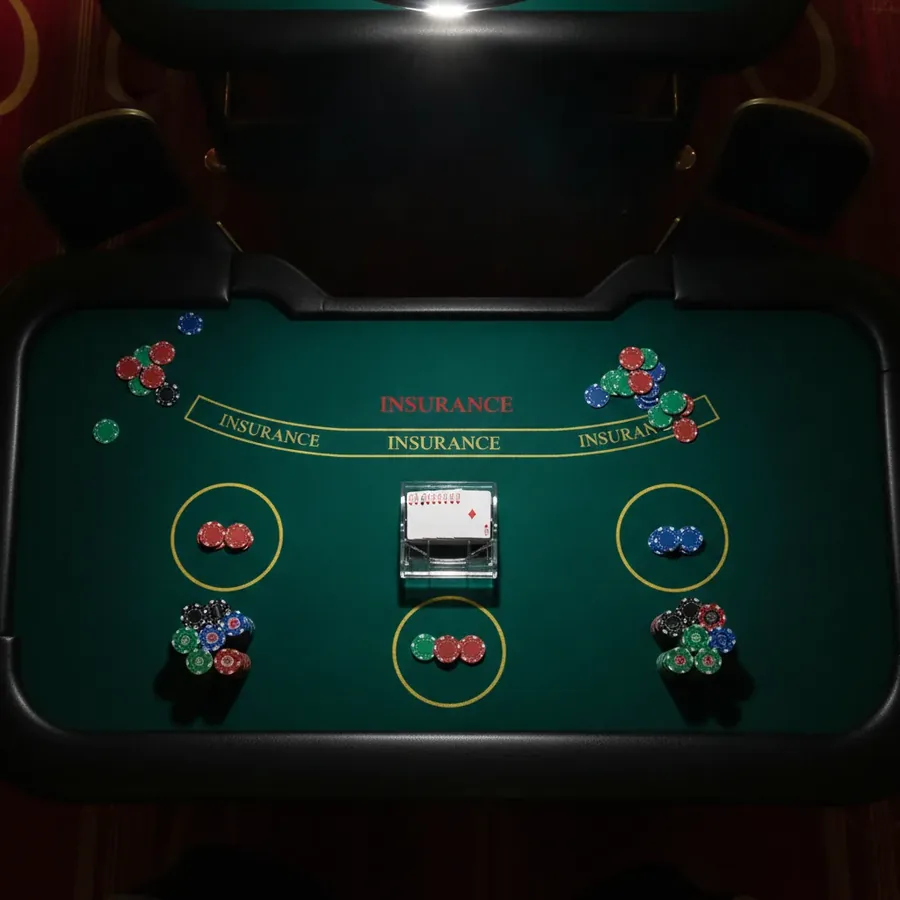
What Push Means: Stake Returns to You
A push occurs when the player's final hand total equals the dealer's final hand total after all drawing phases are complete. In this scenario, the casino retains none of the original stake and returns the full wager amount to the player's balance immediately. This outcome is common in games like Lightning Blackjack where multipliers apply only to winning hands and not to tied results. The player experiences no financial loss or gain during this specific round, effectively neutralizing the risk for that single transaction.
Infinite Blackjack allows unlimited seats at the table, meaning multiple players might experience pushes simultaneously against the dealer's final hand. Each participant receives their stake back independently without affecting the betting limits or the flow of the game for others. The minimum bet starts at 1 EUR while the maximum reaches 5,000 EUR, providing flexibility for different bankroll sizes during these neutral rounds. This mechanism ensures fairness by preventing the house from profiting from identical card distributions across the entire player base.
Understanding the push mechanic is crucial because it does not contribute to bonus wagering requirements despite the money remaining in the account. Table games generally count for only 10% toward the turnover needed to unlock the 300% welcome bonus up to 2,000 EUR plus spins. Therefore, relying solely on pushes to clear conditions is inefficient compared to playing slots which contribute 100% to the same requirement. Strategic players recognize that pushes preserve capital but do not accelerate the withdrawal eligibility process defined in the terms.
The dealer stands on soft seventeen in many variants, which influences the frequency of pushes compared to dealers who hit soft seventeen. This rule difference alters the probability distribution of final totals for both the player and the dealer during each dealing phase. Recognizing how specific rules impact tie rates helps analysts predict long-term volatility and expected value for consistent gameplay strategies. Players should review the specific table rules before sitting down to understand how often their stakes will be returned unchanged.
RNG draws cards from virtual eight-deck shoe
Random Number Generators simulate the shuffling and dealing processes used in physical casinos to ensure unpredictable outcomes for every hand dealt. While live tables use physical cards, digital simulations rely on algorithms that draw from a virtual eight-deck shoe to maintain statistical integrity. This method guarantees that each card has an equal probability of appearing next, preventing any pattern recognition or predictable sequences from emerging. The system continuously reshuffles or uses penetration metrics to mimic real-world deck penetration rates accurately during high-volume sessions.
Blackjack Insurance is a separate side bet available when the dealer shows an ace, paying 2:1 if the dealer achieves a natural blackjack. This option requires a separate wager up to fifty percent of the main bet and carries a significant house edge of 7.47% due to the odds. The RNG determines the hidden hole card instantly, resolving the insurance bet before the player proceeds with their primary hand decisions. Players often avoid this bet unless they employ advanced counting techniques where the true count exceeds positive three for mathematical advantage.
The theoretical return to player for the standard six-deck game with surrender rules sits at 99.54% assuming perfect basic strategy execution by the user. This figure drops significantly if players deviate from optimal moves or choose variations with less favorable rules like six-to-five payouts. Late surrender allows players to forfeit half their bet after checking for dealer blackjack, improving the RTP by approximately 0.08 percentage points. These statistical nuances highlight why understanding the underlying algorithmic structure is essential for minimizing the inherent house advantage over time.
Even Money only possible with Dealer Ace
Even Money is an optional offer presented exclusively when the player holds a natural blackjack and the dealer shows an ace as their upcard. This proposition guarantees a payout equal to the original stake, effectively locking in a 1:1 return regardless of whether the dealer also has blackjack. It serves as an insurance mechanism disguised as a settlement option, removing the uncertainty of the potential push or loss from the main wager. Players accept this deal to secure immediate profit rather than risking the entire bet on the dealer's hidden ten-value card.
Declining Even Money is mathematically superior in the long run because the probability of the dealer having a ten is less than fifty percent. Accepting the guarantee reduces the expected value of the hand by ignoring the potential for the standard 3:2 blackjack payout on non-blackjack dealer hands. The house edge increases substantially when players consistently take even money instead of letting the hand play out according to standard rules. Analysts recommend rejecting this offer unless the deck composition heavily favors ten-value cards through advanced card counting methods.
Live dealer tables like Evolution's Lightning Blackjack feature special multipliers that can boost winnings up to 25x for specific winning hands. These features operate independently of the Even Money decision, which remains a static rule based solely on the initial two-card distribution. Players must decide on the even money offer before the dealer checks for blackjack or applies any lightning multipliers to the result. This timing constraint ensures that the settlement occurs fairly without interference from subsequent game modifiers or promotional enhancements offered by the provider.
The concept of even money ties directly into the broader category of insurance bets which carry a much higher house edge of 7.47%. While insurance covers the main bet loss if the dealer has blackjack, even money settles the main bet immediately at even odds. Both mechanisms protect against the dealer's ace but utilize different payout structures and risk profiles for the participating players at the table. Understanding these distinctions helps gamblers make informed decisions about which protective measures, if any, align with their strategic objectives.
What Hole Card Means at a Live Table
The hole card is the second card dealt to the dealer face-down, which remains hidden until the conclusion of the player's decision phase. In European style rules, the dealer takes this card immediately after receiving the upcard, whereas American style deals it only after players act. This procedural difference significantly impacts the game's strategy and the availability of certain moves like surrender or insurance during the active betting round. Players must adjust their basic strategy charts depending on whether the hole card is drawn early or delayed by the dealer.
Infinite Blackjack utilizes a continuous shuffle mechanism or automatic cut-card procedures that affect how the hole card is revealed and processed. The dealer exposes the hole card only after all players have completed their actions, ensuring no information leakage influences individual decision-making processes. This transparency maintains the integrity of the game by preventing players from knowing the dealer's full hand before committing their chips. The visual reveal is synchronized across all devices to provide a fair and simultaneous resolution for every seat at the virtual table.
Knowing the position of the hole card is critical for calculating the true count when employing card counting strategies in live environments. The presence or absence of high-value cards in the undealt portion of the shoe alters the expected value of subsequent hands significantly. Players tracking the burn card and penetration depth can estimate the likelihood of the hole card being a ten or an ace with greater accuracy. This statistical insight allows disciplined players to increase their bets when the remaining deck composition favors the player over the house edge.
Blackjack variants at a glance
| Variant | Payout | House edge | Rule | Bet range |
|---|---|---|---|---|
| Blackjack Ein Deck, klassische Regeln, 3:2 | 99.85% | 0.15% | Weniger Decks = niedrigerer Vorteil; ein Deck gibt ca. −0.48 Prozentpunkte gegenüber 8 Decks. Oft durch 6:5 Auszahlung kompensiert. | Blackjack 3:2, Gewinn 1:1 |
| Blackjack 6 Decks, S17, DAS, DOA, Auszahlung 3:2, Basisstrategie | 99.54% | 0.46% | Dealer steht auf Soft 17; Verdopplung auf jeder Zweierkarte; Verdopplung nach Split erlaubt; keine Aufgabe. Basisstrategie ist für diesen Wert zwingend | Blackjack 3:2, normaler Gewinn 1:1, Insurance 2:1 |
| Blackjack Surrender (Late Surrender) – Regel-Effekt | n.a. (Regel-Modifikator) | −0.08 Prozentpunkte | Spieler gibt Hand nach Dealer-Blackjack-Prüfung auf, verliert die Hälfte des Einsatzes. Verbessert RTP um ca. 0.08 Prozentpunkte. Early Surrender ist wesentlich wertvoller (bis −0.6 Prozentpunkte), aber extrem selten. | Rückzahlung 50% des Einsatzes |
| Blackjack Liberal Vegas Strip (liberale Regeln, 3:2) | 99.72% | 0.28% | Günstigste Regelkombination: S17 + DAS + Resplit + Late Surrender. Standardabweichung 1,15 | Blackjack 3:2, Gewinn 1:1 |
| Blackjack Split / Double / H17 – Regel-Effekte | n.a. (Regel-Modifikatoren) | H17 +0.22 Prozentpunkte; RSA −0.08 Prozentpunkte; DAS −0.14 Prozentpunkte | Dealer Hits Soft 17 verschlechtert RTP um 0.22 Prozentpunkte; Resplit Aces verbessert um 0.08 Prozentpunkte; Double After Split verbessert um ca. 0.14 Prozentpunkte; 6 Decks statt 8 – ca. 0.02 Prozentpunkte. | Double – Einsatz ×2 mit einer Karte; Split – bis 4 Hände; Ass-Split meist mit einer Karte. |
| Blackjack Insurance / Versicherung (6–8 Decks) | 92.53% | 7.47% | Separate Nebenwette bis 50% der Hauptwette, wenn der Dealer ein Ass hat. Basisstrategie schreibt IMMER Ablehnung vor (außer Karten zählen bei True Count ≥ +3). Bei einem Deck Vorteil ≈ 5.88% | Insurance 2:1 |
Early Surrender is removed from many tables
The game rules for Blackjack Liberal Vegas Strip include a Late Surrender option that improves the Return to Player by approximately 0.08 percentage points. This rule allows players to forfeit half their bet after the dealer checks for blackjack, reducing the overall house edge on this specific variant.
In contrast, Early Surrender is significantly more valuable as it can lower the house advantage by up to 0.6 percentage points, yet it remains extremely rare in modern online live dealer environments. The removal of this feature forces players into standard play where they must decide whether to hit or stand without the safety net of an early exit.
Most current table configurations, such as those found in Infinite Blackjack, omit surrender options entirely, relying instead on strict basic strategy adherence to maintain the stated RTP of 99.47%. Players should verify the specific rule set before joining, as the absence of surrender increases the long-term cost of playing compared to variants that retain these player-friendly mechanics.
Why Loss Progression Quickly Reaches Table Limit
Lightning Blackjack offers betting limits ranging from 1 EUR to 2,500 EUR per hand, providing a fixed ceiling for wagers regardless of the number of seats available at the table. This maximum limit acts as a hard stop for any progressive betting strategy, preventing players from increasing stakes indefinitely during a losing streak.
When applying a doubling strategy like the Martingale system, a sequence of losses rapidly consumes the bankroll and approaches the 2,500 EUR cap much faster than on lower-limit tables. For instance, starting with a small base bet means each subsequent loss doubles the required wager, quickly hitting the upper bound defined by the provider's risk management protocols.
Evolution designs these limits to protect both the casino and the player from unlimited exposure, ensuring that no single session can generate a payout exceeding the table's financial capacity. Consequently, mathematical progression models fail to recover losses once the maximum bet threshold is reached, making sustainable recovery statistically impossible under these constraints.
Highroller from 500 EUR per hand
Infinite Blackjack accommodates high-stakes players with a maximum bet limit of 5,000 EUR per hand, which is double the cap found on Lightning Blackjack’s 2,500 EUR maximum. This higher threshold allows dedicated players to place substantial wagers while still benefiting from the unbounded seating arrangement typical of Evolution's streaming technology.
The presence of four distinct side bets, including Any Pair and 21+3, provides additional avenues for risk-taking alongside the main blackjack action within these elevated betting limits. These optional wagers operate independently of the primary hand outcome, allowing highrollers to diversify their exposure across multiple potential winning combinations simultaneously.
Table games contribute only 10% toward the fulfillment of the 300% welcome bonus requirement, meaning that wagering 5,000 EUR counts as merely 500 EUR of progress. This contribution rate significantly extends the time required to clear bonus funds when playing high-limit tables, contrasting sharply with the 100% contribution rate applied to slot machine gameplay.
Surrender vs Playing Out on 16 vs 10
Basic strategy dictates that players should always decline insurance bets because the house edge stands at 7.47%, which severely erodes long-term profitability compared to the main game. This mathematical reality holds true unless the player employs card counting techniques where the true count reaches +3 or higher, a scenario rarely achievable in live dealer settings.
When holding a hard 16 against a dealer's 10, the decision often hinges on whether a surrender option is active, as giving up results in a 50% return of the original stake. Without surrender, the player must hit, accepting a higher probability of busting, whereas the availability of this rule modifier can shift the expected value in favor of the participant.
The Blackjack Auszahlung 6:5 variant removes favorable rules entirely, imposing a 1.85% house edge that outweighs the benefits of strategic surrender decisions on difficult hands. This structural disadvantage means that even optimal play cannot overcome the inherent mathematical bias introduced by the reduced payout ratio, making every decision less profitable than in 3:2 games.
Six Card Charlie Pays Immediately with Six Cards
Blackjack Party by Evolution focuses on entertainment with two moderators, potentially incorporating unique side rules that differ from the standard Infinite or Lightning formats.
Standard payouts for a natural blackjack are strictly defined as 3:2 in liberal versions like Vegas Strip, yielding 150 EUR for a 100 EUR wager, whereas 6:5 payouts offer only 120 EUR. This difference of 30 EUR per winning hand represents a massive increase in the house edge, demonstrating why rule variations drastically alter the expected return over time.
Players should note that specific side bets like Hot 3 or Bust It may have their own independent win conditions that trigger regardless of the main hand outcome or six-card rules. These auxiliary wagers operate outside the core blackjack strategy, offering separate payout structures that do not necessarily align with the primary game's historical house advantage metrics.
What doesn't count as Blackjack after Split?
Splitting Aces is restricted to receiving exactly one additional card per new hand in Infinite Blackjack, which limits the potential for creating strong totals compared to games allowing multiple hits. This rule reduces the strategic value of splitting pairs of Aces, as players cannot improve hands beyond a single draw on each split Ace. Consequently, the long-term return remains lower than in variants permitting unlimited hits on split Aces.
Blackjack Party runs with two hosts
Infinite Blackjack offers betting limits ranging from 1 EUR to 5,000 EUR, accommodating high rollers who require substantial table stakes for their strategies. The game features four side bets including Any Pair, 21+3, Hot 3, and Bust It, which add layers of risk distinct from the main blackjack wager. Players should note that these side bets carry significantly higher house edges than the base game, affecting overall bankroll management.
Contact
Live - online chat
Banking









Providers












Fairspin Casino 2026